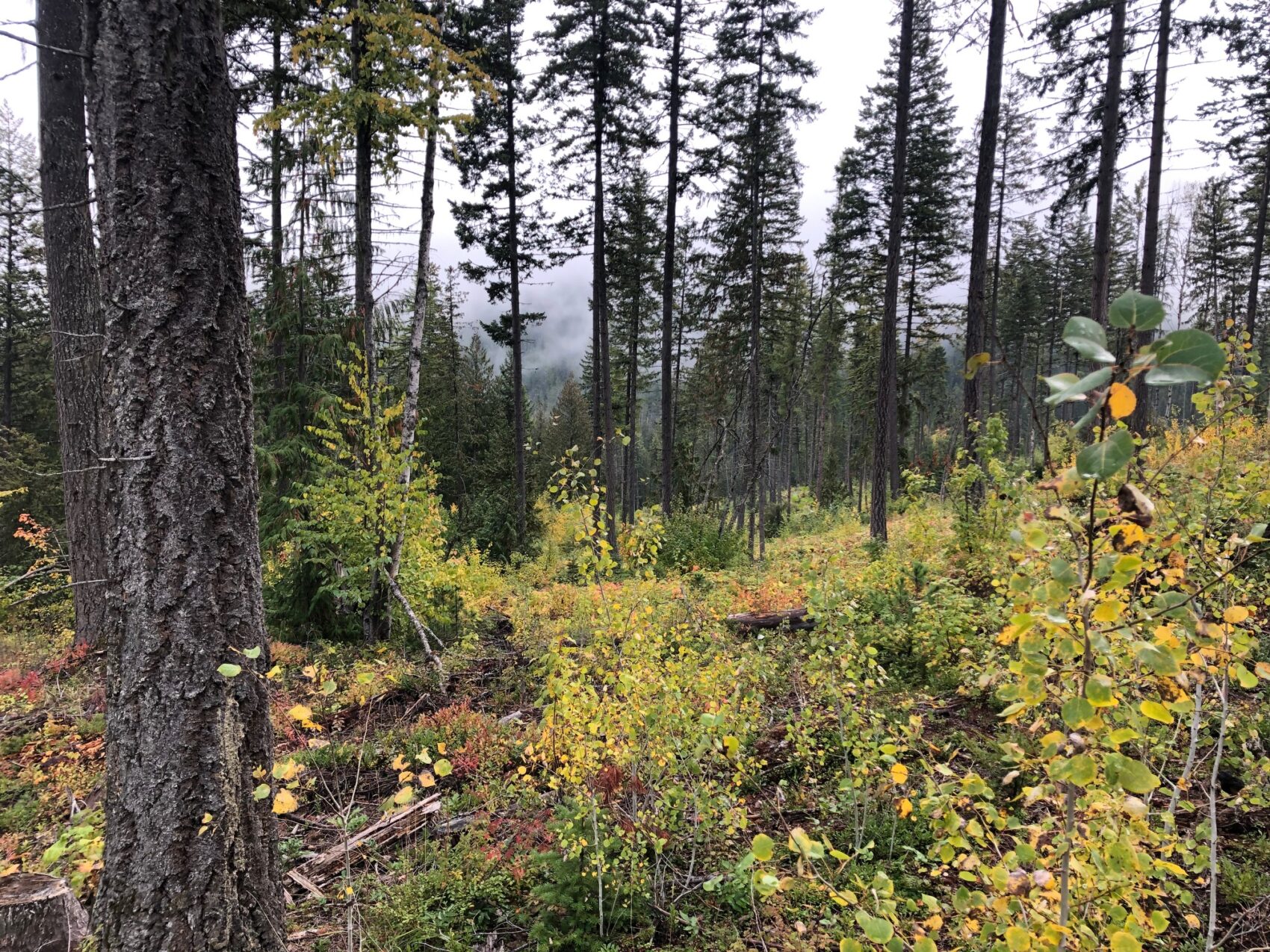
Harrop and Procter, BC– As the Forest Enhancement Society of BC (FESBC) marks its 10th anniversary, the Society is reflecting on the investments it has made to support climate change mitigation across the province. Notably, with support from FESBC, communities like Harrop and Procter continue to enhance the resilience of their forests in the face of a changing climate. This work often includes supporting transportation costs so that uneconomic, low-value fibre is transported to local secondary manufacturing facilities rather than burned on site in slash piles following harvesting operations or post-wildfire salvage.
“There is much more work to be done, as there is a growing recognition that fire seasons are likely to become longer and more intense. Addressing or preparing for this reality requires a comprehensive and holistic landscape-level approach to forest management, one that balances multiple values while proactively managing forest fuel accumulation,” said Brian Watson, Registered Professional Forester (RPF), Operations Manager with FESBC. “Given the scale of the challenge and available resources, managing for forest values that prioritize climate resilience can help maximize the effectiveness of these efforts.”
The establishment of landscape-level fuel breaks is another way to prepare to combat the increases in fire severity attributed to climate change. Fuel breaks are long, wide and continuous treatments in the forest or alongside existing linear features like roads, or power transmission lines. They can be open or treed and are designed to modify fire behaviour and improve suppression opportunities by reducing the likelihood of high-intensity crown fires, or fires that spread from treetop to treetop and create conditions that promote lower intensity groundfires. These features provide suppression options by improving the efficacy of water and retardant drops, provide anchor points for fires suppression activities and creating lower intensity conditions that wildfire crews can more safely work in.
In other cases, FESBC supports the implementation of fuel modification treatments near infrastructure and homes, where forests are thinned and branches and woody debris are removed to reduce the intensity of wildfires and make it easier to extinguish fires that do start.
“In all wildfire risk reduction treatments, thinning out the understory, or the layer closer to the ground, makes the application of fire and retardant on these stands more effective in limiting fire spread and intensity,” noted Watson.
Investing in forest management can do more than mitigate the impact of fires. Healthy forests play an important role in carbon storage, supporting wildlife habitat, in water filtration, and contributing to overall climate resilience.
Additionally, the management of post-harvest debris is another opportunity to mitigate climate change. This debris needs to be eliminated to reduce wildfire risk. Burning these residuals is the most common method employed to reduce the risk of fire. In recent years, FESBC and their proponents have challenged conventional thinking about how fibre from these treatments can be utilized. When materials are located far from processing facilities, FESBC has played a key role in supporting the transport of this low-value fibre to secondary facilities, reducing the carbon footprint of these projects. Equally important, finding alternatives to burning debris piles improves air quality for workers and communities across B.C.
One of the FESBC-funded projects that is helping to mitigate the impacts of climate change includes the Harrop-Procter Community Co-operative’s (HPCC) implementation of landscape-level fuel breaks and their advanced climate adaptation strategies.
Despite being one of the smallest community forests in the province, the HPCC has been a leader in demonstrating how forest management practices can be used to adapt to a changing climate while simultaneously working to reduce carbon emissions. Over the years, several FESBC-funded projects in the communities of Harrop and Procter have generated significant carbon benefits. Over the last three years, FESBC has funded portions of the transportation costs required for the community forest to ship low-value fibre to the local pulp mill and financially break even. With FESBC’s support, roughly 8,533 cubic metres of pulp logs that would otherwise have been burned on-site were instead hauled away and utilized. The reduction in carbon emissions to the environment, as a direct result of this work, is estimated at 4,000 tonnes CO2e, which is equivalent to taking 850 cars off the road for one year.
“With the support of FESBC, we’ve been able to link our climate adaption and wildfire risk reduction work to a real reduction in carbon emissions, diverting material from slash burning and instead putting it to productive use,” said Erik Leslie, RPF, Forest Manager of the HPCC. “This work not only reduces greenhouse gas emissions but also demonstrates how community forestry can lead the way in building a more sustainable, low-carbon future. FESBC’s support has been critical in making this possible.”
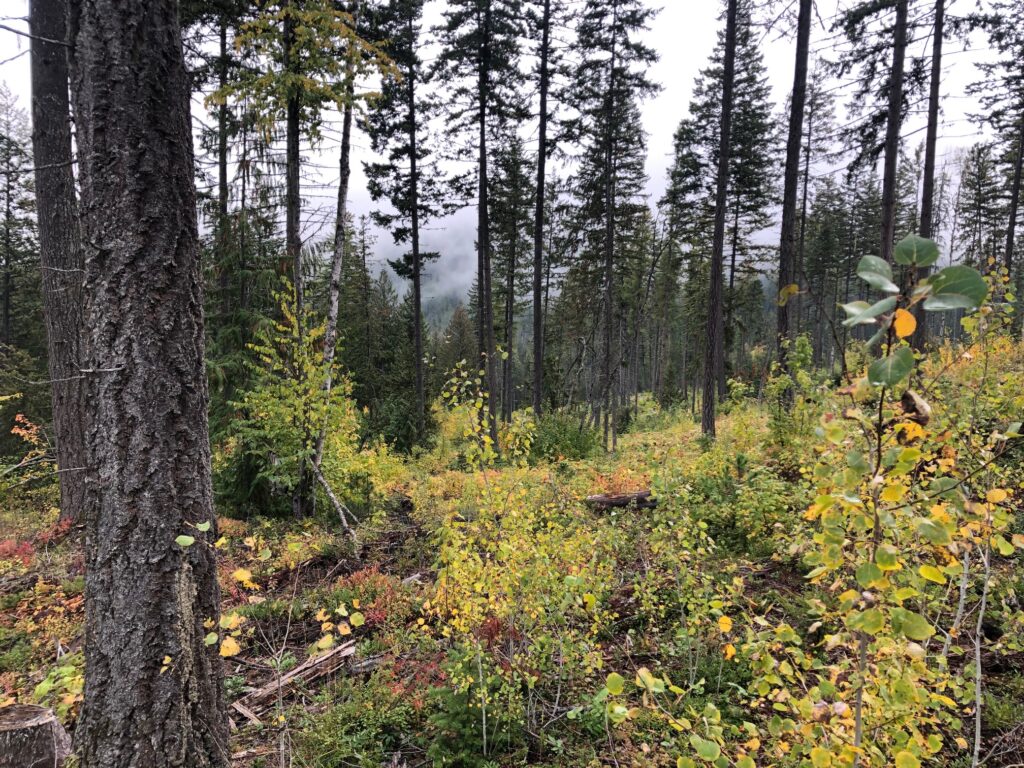 Harrop-Procter Community Co-operative’s fuel treatment block in Harrop. Photo Credits: Harrop-Procter Community Co-operative.
Under FESBC’s fibre utilization program, FESBC’s proponents shipped approximately 560,000 cubic metres of low-value fibre rather than open-burning it in 2025/2026. This translates into approximately 11,200 truckloads of wood fibre to support secondary manufacturing facilities and approximately 180,000 tonnes of avoided greenhouse gas emissions.
“While fossil fuels are consumed during transportation and carbon is released from the manufacturing process at these secondary facilities, the overall net reduction in carbon released can be significant,” explained Watson. “Often, these investments are significantly lower than the social cost of carbon, a metric used by scientists and economists to measure the effectiveness of climate change policies.”
While there is broad agreement on the importance of this work, implementation can be complex due to a range of existing policies and operational considerations.
“As we mark ten years of FESBC, what stands out the most is the tangible impact these projects are having on the ground, the people behind the work, and the role they play in addressing climate change,” said Jason Fisher, RPF, Executive Director, FESBC. “Climate change is one of the defining challenges the forestry industry is facing and the projects highlighted here demonstrate that practical, scalable solutions exist. Whether it’s reducing emissions through fibre utilization or strengthening forests to better withstand wildfires, this work is delivering real results across the province. It shows that with the right partnerships and targeted support, we can take meaningful action that will benefit future generations.”
For an interview with FESBC, contact:
Aleece Laird, Communications Liaison | communications@fesbc.ca | 250.574.0221
FESBC would like to gratefully acknowledge the financial support of the Province of British Columbia through the Ministry of Forests.