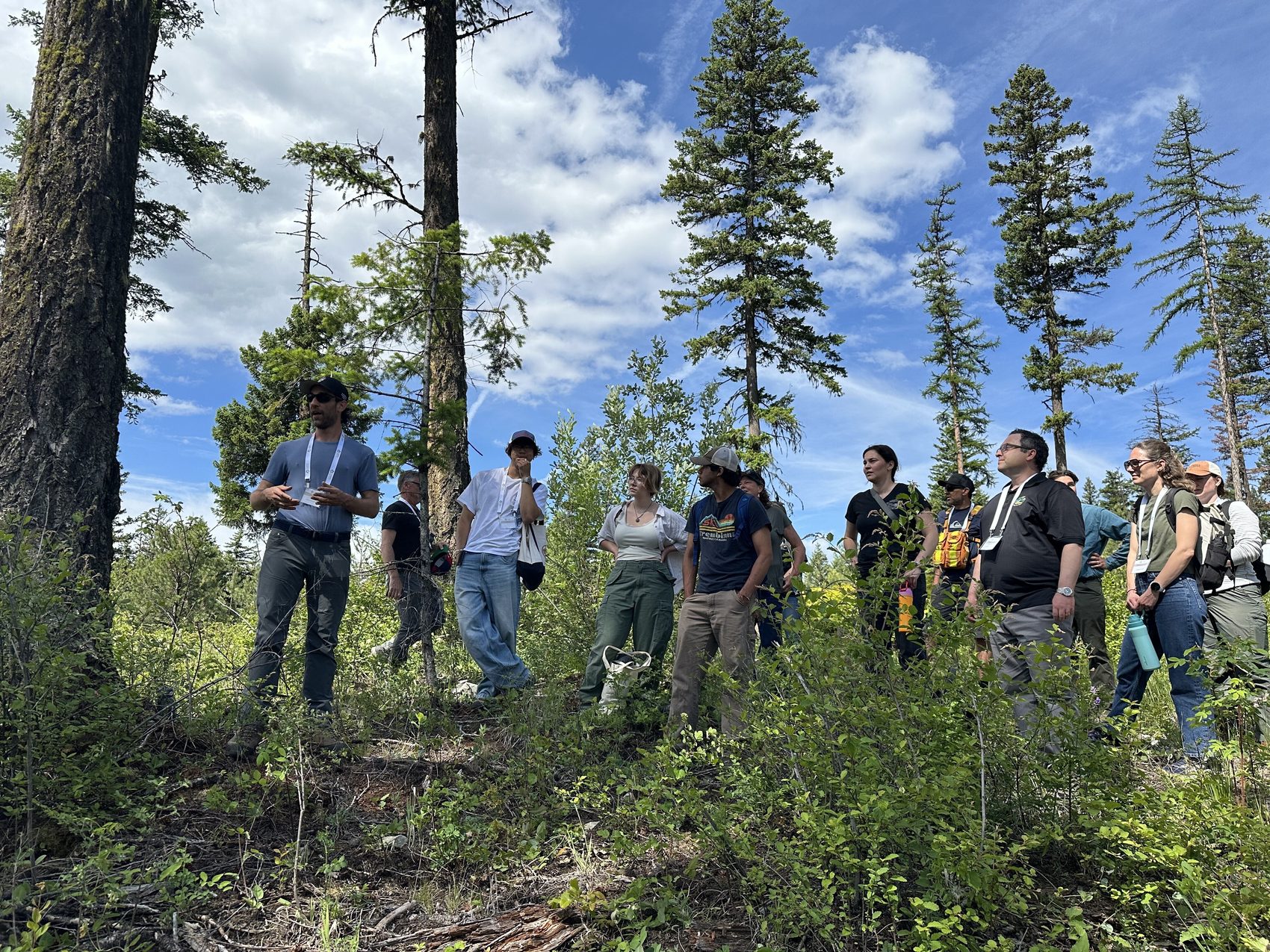
Field tour participants discussing climate adaptation. Photo credit: Brooke Lerman.
British Columbia – As the Forest Enhancement Society of BC (FESBC) marks its 10th anniversary, the Society is reflecting on the investments that have supported community forest projects across the province. From wildfire risk reduction and ecosystem restoration to better fibre utilization and local employment, these investments have helped community forests advance work that reflects local priorities and supports the long-term stewardship of our forests.
The Province of BC grants Community Forest Agreements to selected communities, giving them the right and responsibility to manage specific areas of Crown forest, generally located near their communities. Rooted in place, community forests manage for a broad range of ecological, cultural, social, and economic values and invest with future generations in mind.
“Community Forest Agreements allow communities and forest managers to take the long view in a way that many other tenures cannot,” said Jennifer Gunter, Executive Director of the BC Community Forest Association (BCCFA). “Because they are long-term tenures, rooted in place and accountable to local communities, community forests often invest in work that goes well beyond timber harvesting.”
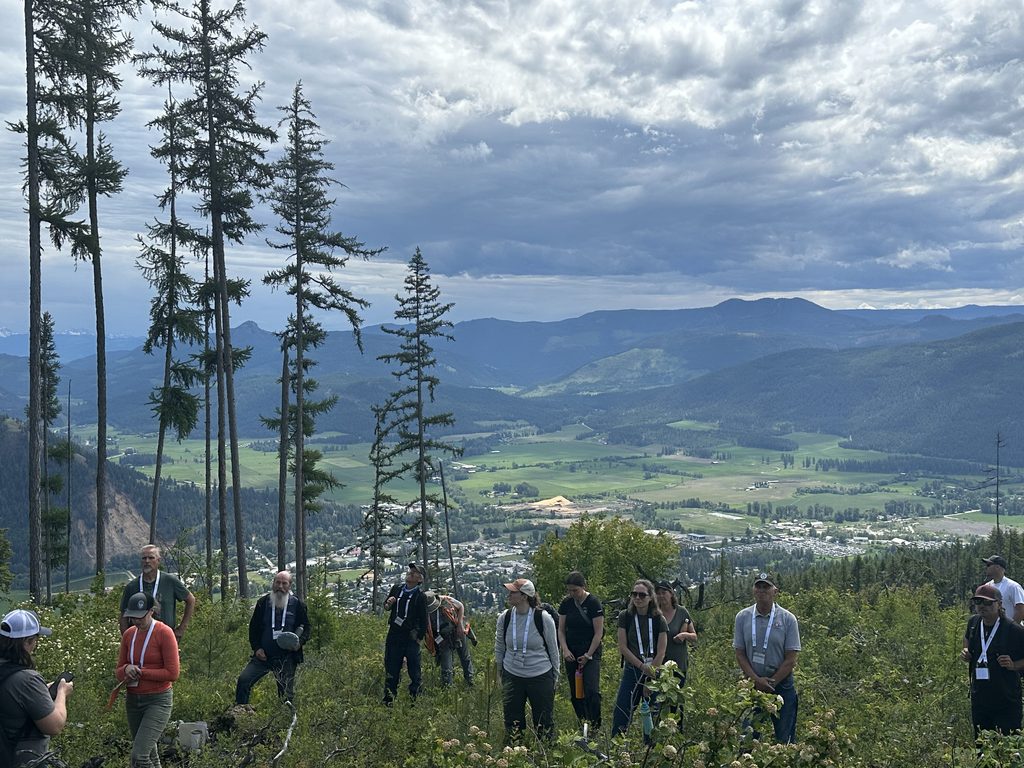
Discussing silvopasture techniques above the city of Lumby. Photo credit: Brooke Lerman.
More than half of B.C.’s community forests are held by and governed through partnerships between First Nations and local communities, while many others work closely with First Nations. Across the province, community forests are advancing a wide range of projects, undertaking wildfire risk reduction, wildlife habitat enhancement, climate adaptation, ecosystem restoration, recreation improvements, innovative silviculture, and sustainable timber management. FESBC funding has helped make many of these projects possible.
“Community forests are located in places where steps taken to reduce the wildfire risk to communities and important infrastructure, like highways and watersheds, have made a real difference,” said Jason Fisher, Registered Professional Forester and the Executive Director of FESBC.
Some of these projects also drive innovation. One example is the Monashee Community Forest, where a Silvopasture project – Silvopasture is the practice of agriculture in forested landscapes – is exploring how livestock grazing can be used to help maintain the effectiveness of wildfire fuel reduction treatments over time. Bringing together First Nations, forestry, and ranching partners, the project looks at the intentional management of trees, forage, and livestock as a mutually beneficial system.
“One of the strengths of community forestry is the willingness to ask, ‘What if?’ What if we manage for multiple values? What if we think in generations instead of years? What if we work together? What if we invest in future forests?” Gunter said.
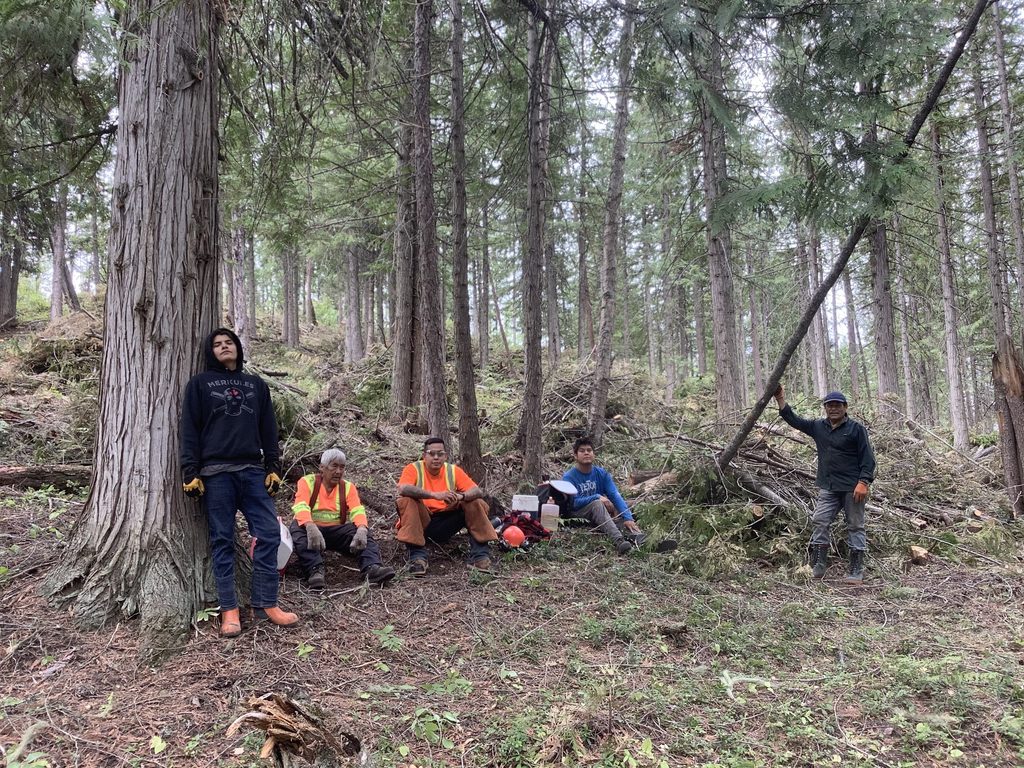
RiverBear (contractor) crew conducting wildfire risk reduction treatments. Photo credit: Jesse Grigg
The Monashee project reflects an approach seen across the Community Forest Program: trying new ideas, learning from the land, and adapting management based on what works. Other community forests are applying this approach to juvenile stand management, ecosystem restoration, prescribed and cultural fire, and climate adaptation.
FESBC investments have allowed many community forests to increase their impact. By funding wildfire fuel treatments, restoration work, and projects that better use low-value fibre to create green energy, the investments help community forests advance interconnected projects that contribute to a longer-term vision for both the forest and the local community. These projects also provide important opportunities for contractors, forestry workers, equipment operators, and local businesses.
“The fact that these forest enhancement projects are being done in community forest tenures close to communities means that the investments FESBC is making are also more likely to be maintained over time and more connected to the community itself,” Fisher said.
This local connection matters as communities respond to the increased risk of wildfires, a changing climate, biodiversity concerns, and changing economic conditions.
“Community forests don’t simply operate within or near communities—they are part of them,” Gunter said. “The people making decisions about the forest live and work in the community. They know the land, understand local priorities, and live with the results of those decisions alongside their neighbours.”
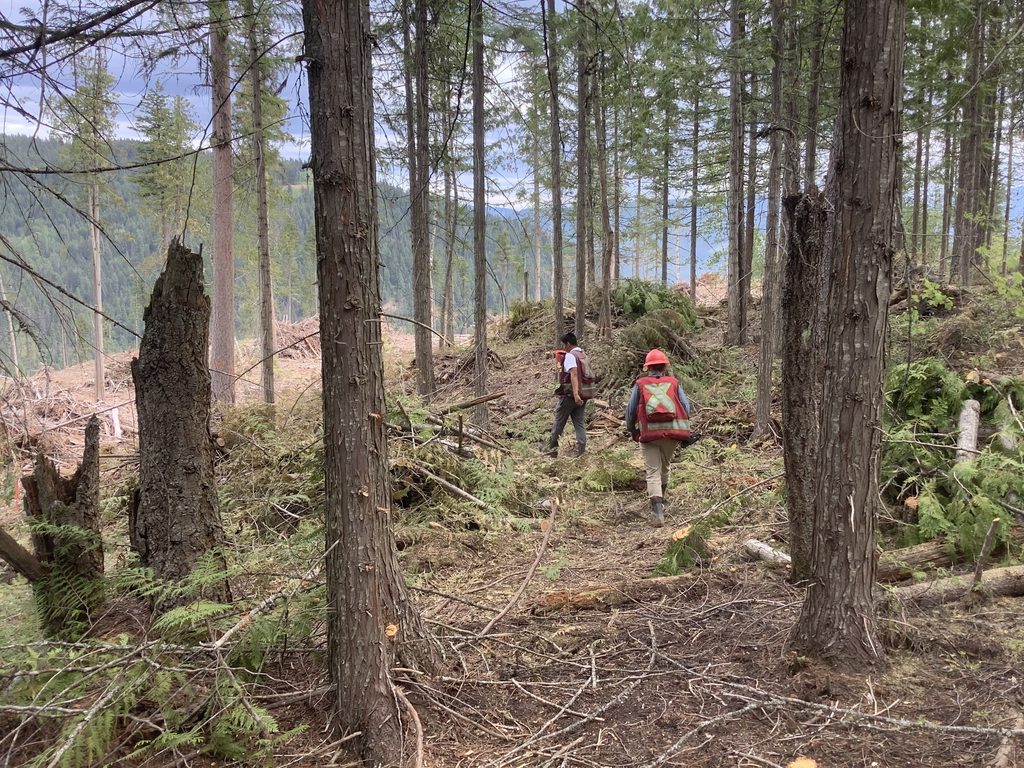
Yucwmenlúcwu supervisors conducting quality assurance assessments. Photo credit: Jesse Grigg.
Fisher believes that community forests provide a practical model for connecting forest management with local priorities. Community forests create opportunities for local people to understand forest management, contribute their knowledge and perspectives, and see the work happening on the ground.
“We appreciate the work community forests do. Not only do many of them invest their own revenues in better forest management, but they also engage with community members to build awareness and seek input and support for innovative, long-term forest management,” Fisher said.
As community forests test new approaches, monitor results, and share what they learn, that experience contributes to forest management well beyond individual tenures.
“Over the past decade, we’ve seen firsthand what community forests can accomplish when local knowledge is matched with longer-term investment,” shared Fisher. “By working together to invest in projects with community forests, we’re collectively helping reduce wildfire risk, restoring ecosystems, creating local economic opportunities, and working to ensure these community forests continue delivering benefits for communities across British Columbia for generations to come.”
To book an interview with the FESBC or BCCFA, contact:
Aleece Laird, Communications Liaison, communication@fesbc.ca 250.574.0221
About the Forest Enhancement Society of BC (FESBC)
The Forest Enhancement Society of BC (FESBC) is a Society that advances environmental and resource stewardship across British Columbia by investing in projects that reduce wildfire risk, utilize low-value fibre, improve forest health and wildlife habitat, and support healthier, more resilient forests. Since 2016, FESBC has invested in hundreds of projects that deliver environmental, social, and economic benefits for communities throughout the province while supporting innovative approaches to sustainable forest management. Many of these projects have been led by community forests.
About the BC Community Forest Association (BCCFA)
The BC Community Forest Association (BCCFA) is a provincial organization representing over 100 rural and Indigenous communities across British Columbia involved in community forestry. Community forests are locally managed forests that balance environmental, social, cultural, and economic values while creating long-term benefits for the communities they serve. The BCCFA supports its members through education, collaboration, knowledge sharing, and advocacy, helping strengthen community-based forest stewardship and advance innovative approaches to sustainable forest management.