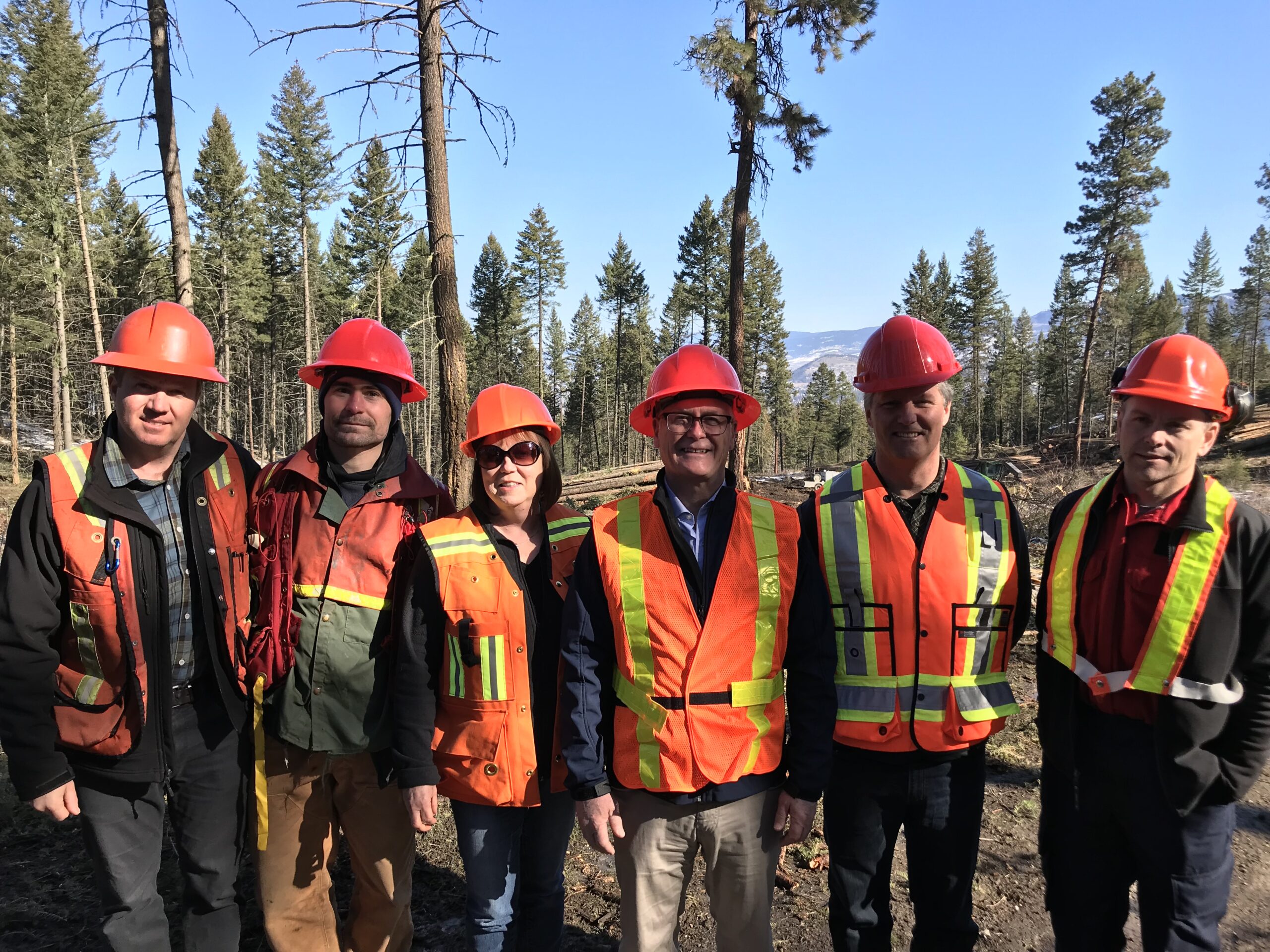
A special feature interview with Doug Donaldson, former Minister of Forests, Lands, Natural Resource Operations and Rural Development
As the Forest Enhancement Society of BC (FESBC) marks its 10th anniversary, it is a chance to look back on a decade of investments and work that has quietly but meaningfully contributed to the health and resiliency of forests and communities throughout British Columbia (B.C).
Established in 2016, FESBC emerged at a time when B.C.’s forests were facing growing pressures from the risk of catastrophic wildfires and the mountain pine beetle epidemic to ever changing economic conditions in the forestry sector and growing concerns specific to climate change. For Doug Donaldson, who served as Minister of Forests, Lands, Natural Resource Operations and Rural Development (now the Ministry of Forests) for a few years shortly after FESBC’s creation, the Society quickly proved its value in ways that were not initially expected.
“When I first became Minister, there were questions about how the Forest Enhancement Society of BC was structured and what it could achieve,” Donaldson recalled. “But what I saw over time was an evolution and the Society found a niche where it could deliver real, on-the-ground outcomes in a very efficient way.”
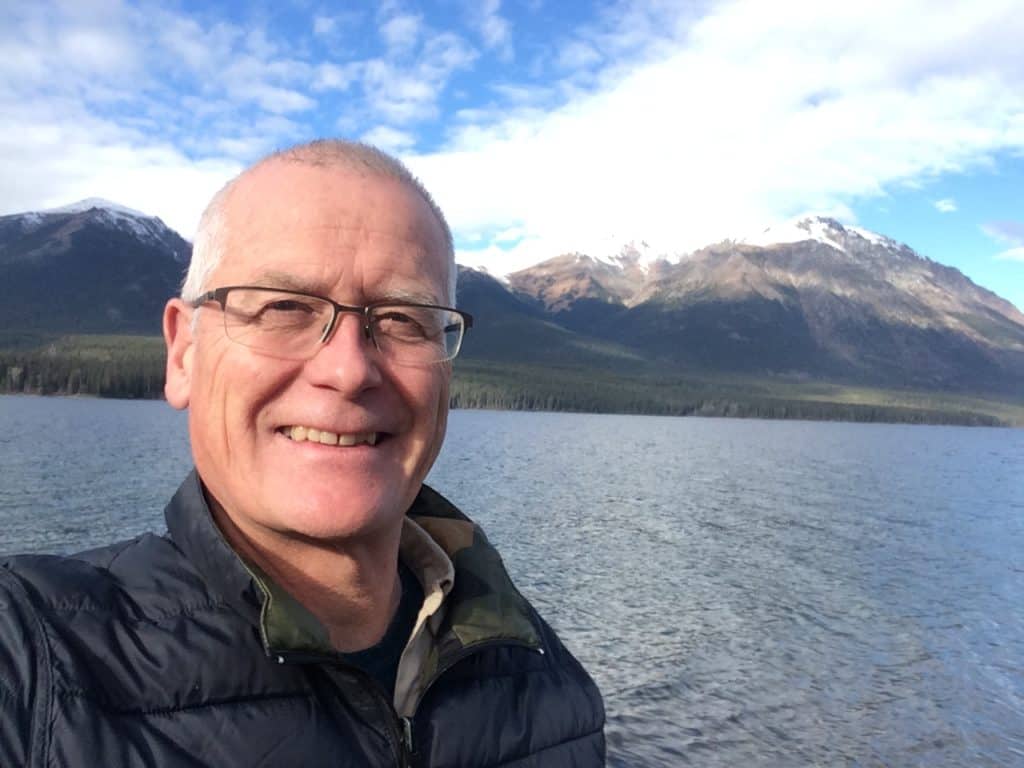 Doug Donaldson. Photo credit: provided by Doug Donaldson.
Delivering Where It Matters Most
For the past 10 years, FESBC has supported hundreds of forest enhancement projects focused on wildfire risk reduction, forest rehabilitation, and the enhanced utilization of wood fibre left after harvesting and thinning activities or a wildfire. For Donaldson, what mattered most was not just the scope of the work but how it got done in communities throughout the province.
“With relatively low overhead and a small team, the Forest Enhancement Society of BC has been able to run a wide range of programs to invest in forest enhancement projects that make an impact with positive outcomes in so many communities,” he shared. “And that impact is not easy to achieve.”
Through site visits during his time as Minister, Donaldson saw firsthand how many of the projects came together, often bringing local contractors, BC Wildfire Service crews, local fire departments, forest professionals, and community members together.
“I could tour a project site and see so many different values being addressed all at once,” he said.
That stuck with him.
“Indigenous values, forest fuel reduction activities to mitigate wildfire, wildlife habitat enhancement work, enhanced public safety, the provision of local jobs, and more. It was really cool to see how it all came together in a way that reflected the needs of that area and the community.”
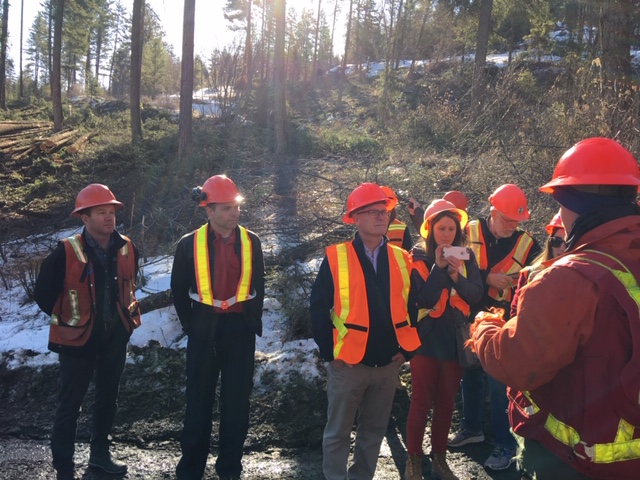 FESBC Project tour with Doug Donaldson. Photo credit: FESBC
The Power of Local and Collaborative Approaches
Collaboration has been at the core of FESBC’s work, especially with First Nations, communities, and other partners.
“In British Columbia, there is a duty to ensure First Nations are fundamental to decision-making on the land base,” Donaldson explained. “The Forest Enhancement Society of BC projects have certainly helped create those entry points for collaboration, where Indigenous leadership and communities can all work together in meaningful ways.”
He also emphasized the importance of solutions that are locally driven.
“First Nations and other local communities must have a strong voice in what happens in their own backyards,” he said. “In my experience, the Society has been a tool to help make that happen, supporting projects that are shaped by local knowledge and carrying out those priorities.”
That approach has helped to build and strengthen trust.
“In my estimation, First Nations and communities didn’t see the Forest Enhancement Society of BC as ‘government’ in the traditional sense, and that made it easier for the Society to engage and build connections for collaboration. The trust built in the past ten years has enabled forest enhancement projects not only to meet important objectives that impact us all, but to create better relationships that will carry forward into the future.”
Confidence in the Outcomes
Looking back on his time as Minister, Donaldson said FESBC stood out for a simple reason – it worked.
“In government, you’re often dealing with issues where things aren’t going as planned,” he said. “But with the Forest Enhancement Society of BC, I didn’t really have that concern. Things were cooking along well. The work was clear, it was communicated well, and the projects were delivering real results on the ground. As Minister, that gave me confidence.”
Looking Ahead Through a Lens of Hope
While challenges remain in B.C.’s forest sector, Donaldson remains optimistic about the future.
“It’s a tough time for many people, families, and communities tied to B.C.’s traditional forestry model,” he said. “But I have a lot of faith in people’s resilience and there are many people working toward new approaches to forest management in this province which gives me a real sense of hope.”
FESBC’s Executive Director, Jason Fisher, echoed Donaldson’s hopeful outlook.
“We are grateful to former Minister Doug Donaldson for his leadership and his deep understanding of the connection between forest resilience and the resilience of rural communities in British Columbia. His perspectives reflect what we see on the ground where First Nations, community leaders, and partners are coming together to do impactful and important forest enhancement work. We continue to support that good work and help advance practical solutions that strengthen the resiliency and health of our forests now and for generations.”