By Stephanie Cleland, PhD, MSPH, and Jason Fisher, RPF
Original article published by BC Forest Professional Magazine.
Smoke and Human Health
Across BC, significant wildfires have become an annual occurrence, underscoring the need for forest management practices to reduce long-term wildfire risk. While activities such as prescribed burning are beneficial for fuel management, both wildfire and prescribed fires produce smoke that can pose significant risks to human health. Notably, the impacts of smoke often extend beyond areas directly affected by fire, as smoke can travel significant distances, exposing communities both near and far from the fires.
While the health risks specific to prescribed fire smoke remain understudied, the impacts of wildfire smoke on human health are becoming more widely understood. Substantial evidence has linked short-term exposure, over periods of days or weeks, to an increased risk of mortality and a range of acute health effects, including respiratory issues such as asthma exacerbations, cardiovascular events, and impacts on cognitive function.
Emerging evidence also suggests that repeated or prolonged exposure may contribute to reduced lung function, increased risk of chronic disease, and premature mortality. Exposure during pregnancy has also been linked to adverse birth outcomes such as pre-term birth and low birth weight. Additionally, smoke exposure may affect mental well-being. In many areas, repeated smoke events contribute to increased stress and the disruption of daily activities, particularly during the summer months.
Importantly, not all populations are affected equally by smoke. Outdoor workers, including those in forestry, often experience higher levels of exposure, while children, older adults, pregnant individuals, and those with pre-existing health conditions are more susceptible to adverse effects. These risks are compounded in communities with limited access to healthcare services or clean indoor air, such as rural and remote communities or neighbourhoods with older, poorly sealed housing.
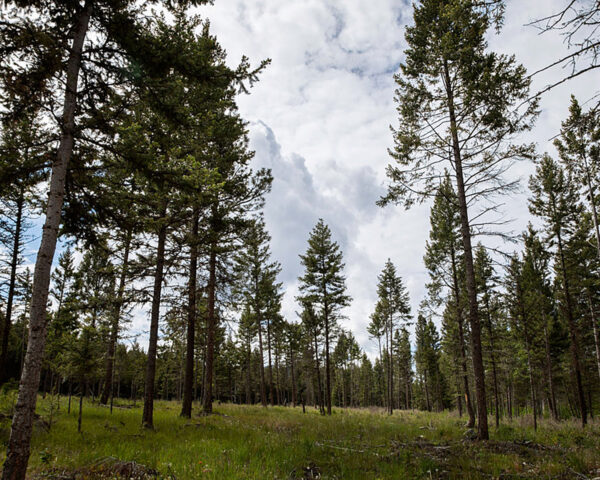 Actions taken for wildfire management can often create trade-offs for smoke management, and vice versa. This wildfire risk reduction treatment was funded by FESBC. (Photo credit: Tiffany Christianson Photography)
Fire on the Landscape
There is little doubt that fire plays a necessary role in many of BC’s ecosystems. Lodgepole pine stands, for example, rely on heat from fire to release seeds from cones so they can regenerate. In dry Douglas-fir forests, frequent, low-intensity fires historically maintained open stands with widely spaced trees and limited ladder fuels. These conditions reduced the likelihood of high-intensity wildfires and supported a range of wildlife and plant species.
For thousands of years, Indigenous Peoples used fire to manage these landscapes through practices referred to today as cultural burning. These burns supported the production of food and medicinal plants and improved wildlife habitat. In BC, this practice was effectively banned under the Bush Fire Act of 1874. Combined with decades of fire suppression, this led to denser forests and greater fuel accumulation across many regions of the province and country. Today, cultural burning is gaining renewed recognition and being redeployed to reduce wildfire risk.
Prescribed fire is also being used more frequently as a tool to reduce fuel loads, lower the intensity of future wildfires, and better protect communities, infrastructure, and forest values. Unlike uncontrolled wildfires, prescribed burns are planned, smaller in scale, and conducted under very specific conditions. This allows for greater control over fire behaviour and timing, while accounting for other values like air quality, wildlife habitat, and general safety. However, due to long-term in-growth of some forests from historic fire suppression, prescribed burning without prior mechanical treatment may lead to undesirable results.
Despite these benefits, the smoke produced from cultural and prescribed burns remains an important consideration. Smoke is a complex mixture of gases and particles, and the composition depends on what is burned, how it burns, and how far the smoke has travelled. While smoke from prescribed fires is less likely to travel long distances than wildfire smoke, it can still affect nearby communities and pose substantial health risks.
The key difference between wildfire smoke and prescribed fire smoke is predictability. Because prescribed burns are planned, there is an opportunity to prepare for the resulting smoke exposure. This includes notifying communities in advance, coordinating with local health authorities and agencies, and providing guidance on how to reduce smoke exposure during burning events. Even with advance planning, smoke cannot be fully controlled, and exposure and the associated health effects cannot be eliminated. This means smoke management needs to be considered as a core part of wildfire management, rather than as a secondary outcome.
Reducing Wildfire Risk While Managing Smoke Exposure
While wildfire management and smoke management are intrinsically linked, they present different management challenges. Wildfire management includes both reactive wildfire suppression focused on reducing the threat to life, infrastructure and landscapes during an active fire event, as well as proactive management aimed at reducing fuel loads through mechanical means or by applying cultural and prescribed fire. At the same time, managing the impacts of smoke requires both a rapid public health response to minimize exposure and a preventative, longer-term perspective. Smoke is not only harmful during and after wildfires but can also pose longer-term health risks as exposure accumulates over time. As such, actions taken for wildfire management can often create trade-offs for smoke management, and vice versa.
While both wildfire and smoke management aim to better safeguard human health and well-being, managing smoke presents a distinct challenge. Unlike cultural and prescribed burns and some wildfires, where fire can be beneficial on the landscape, there is no such thing as “good” smoke when it comes to human health, and no level of exposure is considered safe.
In many parts of BC, particularly near the wildland–urban interface, fuel treatments and prescribed burning are important tools for reducing accumulated fuels and restoring forest conditions. These treatments are often implemented in areas where communities are nearby, meaning that the benefits of reduced wildfire risk are directly connected to an increase in smoke exposure. This creates a challenge for forest professionals, where decisions made to reduce long-term wildfire risk should also account for the potential impacts of smoke on human health. Furthermore, smoke exposure is increasingly recognized as a workplace hazard and concerns are being raised about the impact of smoke on wildland firefighters and other forest workers.
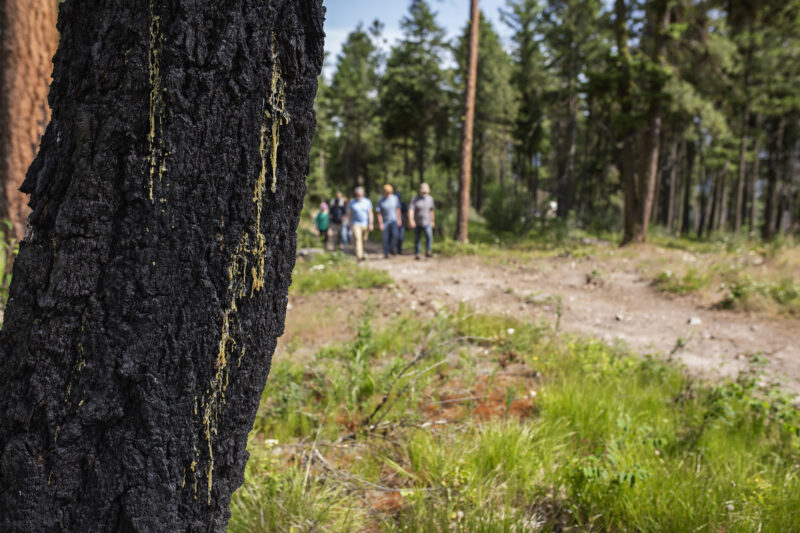 A forestry crew tours a wildfire risk reduction treatment funded by FESBC. (Photo credit: Tiffany Christianson Photography)
Putting it into Practice
We suggest that forest management decisions consider both ecological outcomes and human health. This will require closer alignment between forestry and public health, particularly in the planning and implementation of forest management practices that rely on fire to dispose of slash piles and in the use of cultural and prescribed burns.
Early engagement with communities is a key part of this process. Providing clear information about planned activities, expected smoke conditions, and available exposure mitigation measures allows individuals and communities to better prepare. It also creates space for concerns, such as health impacts, disruption to daily activities, or risk of uncontrolled burns, to be raised and addressed before work begins.
Public health also has a role to play in supporting this work. Collaboration between forestry professionals and public health professionals can help ensure that communication is accurate, accessible, and tailored to local conditions and communities. This is particularly important in rural and remote areas, where resources to mitigate exposure may be more limited.
In addition to communication, there are opportunities to reduce emissions of smoke by changing field conditions. In many fuel management projects, residual biomass is piled and burned on site to reduce fuel loads. Programs invested in by the Forest Enhancement Society of BC (FESBC), for example, are helping to enable fibre recovery and alternative uses for biomass, reducing the need for open burning. Where combustion is required, engineered burners such as those found in bioenergy facilities, or air-curtain burners, can result in more complete combustion and lower greenhouse gas emissions. FESBC is also working with forest professionals to explore smokeless mechanisms for the disposal of wood waste, such as the chipping and spreading of residual biomass.
While some level of smoke exposure is unavoidable, there are practical steps that can reduce risk. Ensuring that communities understand the health risks of smoke and how to mitigate exposure is essential. This includes monitoring local air quality conditions, reducing time spent outdoors during periods of poor air quality, and lowering physical activity levels when smoke is present. Indoor air quality can be improved through the use of portable air cleaners, and public buildings with effective air filtration can provide access to cleaner air during smoke events. When exposure cannot be avoided, properly fitted respirators such as N95 masks can also reduce risk.
Access to these measures often varies from one community to another. Those located closest to prescribed burns or wildfire activity, often in more rural or remote settings, may have more limited access to resources to mitigate exposure. This creates an extra layer of consideration when planning treatments.
Looking Ahead
As wildfire activity and smoke exposure continue to increase, smoke management needs to become a more consistent consideration in forest management and planning. This involves considering smoke exposure in treatment design, incorporating air quality considerations into planning processes, and continuing to build collaboration between forestry, public health, and the communities themselves.
For forest professionals, the relationship between fire and smoke represents an expanding area of responsibility. Decisions made to manage wildfire risk have direct implications for human health.
Prescribed fire will continue to play an important role in reducing long-term wildfire risk and restoring ecosystem function. At the same time, its use may result in more frequent, localized smoke exposure for certain communities. Balancing these outcomes requires careful planning, proactive engagement with communities, clear communication, and an understanding of how different communities may be affected. This is part of the professional responsibility of foresters to help better protect the public interest.
Overall, a more wholistic approach to forest management recognizes that reducing wildfire risk and protecting public health are not separate objectives. Both are part of the same system, and both require consideration of the people and communities that will be impacted in the development and application of forest practices.
AUTHOR BIOS
Dr. Stephanie Cleland is an assistant professor and the Legacy for Airway Health Chair in Promotion of Lung Health in the Faculty of Health Sciences at Simon Fraser University. She is also a research scientist in the Centre for Lung Health at the Vancouver Coastal Health Research Institute. Dr. Cleland’s research uses environmental epidemiology, exposure assessments, and health impact assessments to investigate how exposures such as wildfire smoke and extreme heat adversely impact human health.
Jason Fisher, RPF is the executive director of the Forest Enhancement Society of BC. FESBC uses its funding from the Ministry of Forests to support forest investment projects across BC that reduce wildfire risk, enhance wildlife habitat, assist the recovery of forests impacted by fire, insects and disease, and reduce GHG emissions. Jason earned degrees in forestry and law and has worked in the private and public sector including serving as a VP with Dunkley Lumber and Pinnacle Renewable Energy and as an associate deputy minister in BC’s forest ministry. Jason is also an instructor at the University of Northern BC where he teaches a senior level course on forest policy and management. Jason and his family live in Prince George, located within the traditional territory of the Lheidli T’enneh.