British Columbia: As the Forest Enhancement Society of BC marks its 10th anniversary, the Society is reflecting on the investments made and the meaningful impacts achieved, many in partnership with other organizations. One such partnership with the Habitat Conservation Trust Foundation (HCTF) has supported coordinated investments in research and field work that strengthen the health and resilience of B.C.’s forests – home to a diverse range of wildlife species. In total, FESBC and HCTF have co-funded 117 projects throughout B.C.
Enhancing Wildlife Habitat in the Boundary Region
One example of a project jointly supported by FESBC and HCTF is the Province’s Boundary Restoration and Enhancement Program (BREP), which has led restoration efforts in the Boundary Region for more than a decade. The program implemented by B.C.’s ecosystems and habitat restoration staff focuses on improving wildlife habitat quality and increasing forage availability for species at risk, ungulates, and other wildlife, while strengthening ecosystem resilience by restoring degraded habitats across the region.
Strategically utilizing investments from HCTF and FESBC from 2017 to 2024 alongside provincial funding, the project conducted forest thinning and prescribed burn treatments and then monitored vegetation changes within restoration sites.
“One key aspect of the project was integrating vegetation assessments, restoration activities, and monitoring across multiple sites in the Boundary region to inform subsequent restoration treatments. This iterative approach of assess-restore-monitor and repeat over many years and sites generates better wildlife habitat and forestry objectives,” said Dan Buffett, CEO, HCTF.
The program continued vegetation and wildlife monitoring, treated invasive plants, and completed two additional prescribed burns in partnership with the BC Wildfire Service and First Nations partners. By 2024, approximately 126 hectares had been treated with prescribed burning. These controlled burns help restore habitat conditions for wildlife species such as mule deer, white-tailed deer, elk, Williamson’s sapsucker, and Lewis’s woodpecker. They also reduce the risk and intensity of future wildfires by lowering the amount and continuity of forest fuels (combustible materials) in the area.
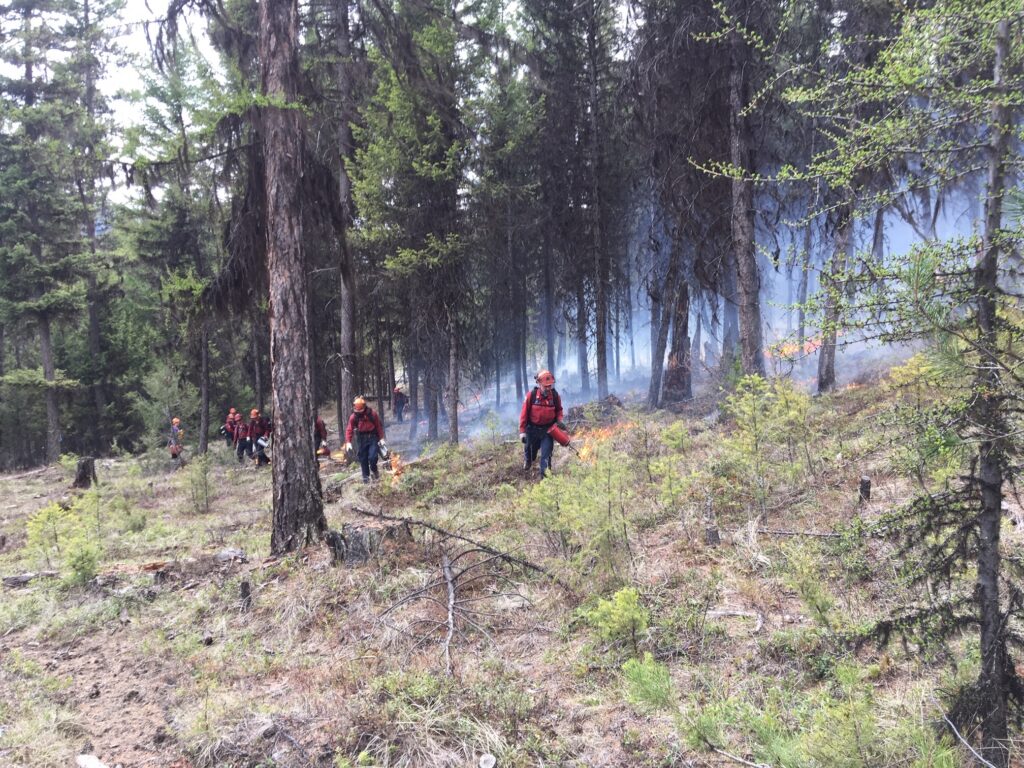 BC Wildfire Service crew members conducting ignitions. Photo Credits: Boundary Restoration and Enhancement Program.
“Partnerships were crucial to the success of this project,” added Buffett. “Building strong relationships with First Nations, and bringing together western and traditional knowledge, not only improves this habitat enhancement work, but also improves success for planning future initiatives together.”
This long-term monitoring data, along with First Nations’ traditional ecological knowledge, is helping inform ecosystem restoration and conservation initiatives. The Province is continuing the program led by ecosystem and habitat restoration teams in the Ministry of Water, Land and Resource Stewardship.
“Restoring degraded habitats and reducing wildfire risk are critical priorities for our government,” said Randene Neill, Minister of Water, Land and Resource Stewardship. “Through partnerships like this, we are investing in practical, on-the-ground work that improves wildlife habitat, strengthens forest resilience, and supports long-term ecosystem health across British Columbia.”
Utilizing Fire to Enhance Wildlife Habitat in Northeast B.C.
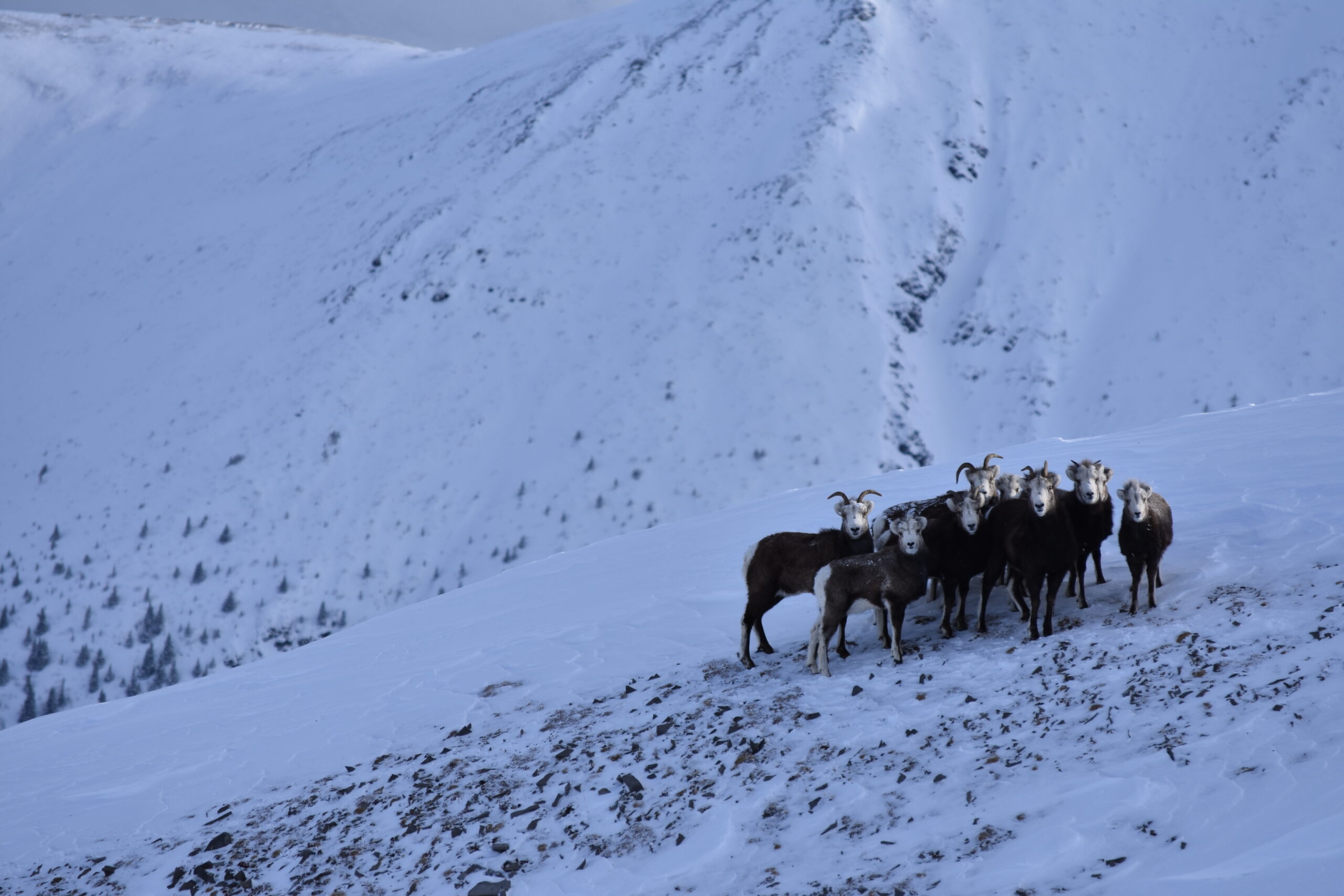
Another project jointly funded by HCTF and FESBC utilized prescribed burning to restore degraded Stone’s sheep habitat and improve forage quality. The project began in 2020 as an initiative of the Wild Sheep Society of BC and to date, approximately 1,200 hectares of sheep habitat across Northeastern British Columbia have been treated, restored, and improved.
“There has been research done before on sheep and prescribed burns, but one part that was missing was understanding the health effects when sheep have access to better forage, specifically when the burns are done in places where the sheep are able to feed close to escape terrain,” explained Alicia Woods, Wildlife Biologist, Ridgeline Wildlife Enhancement Inc. “We partnered with the University of Northern British Columbia to look at that health component. From there, we conducted the prescribed burns and then monitored the vegetation response as well as the sheep response, both before and after the burn.”
Prescribed burning has been conducted in specific terrain, at distinct times of the year, to maximize benefits to Stone’s sheep. These, as Woods explained, differ greatly from normal wildfires, as they are done in a controlled manner under specific weather and site conditions, and utilize knowledge and expertise from partners like BC Wildfire Service.
“Within two months after the burn, most people wouldn’t even know that there was a fire there,” she added.
 Area before the prescribed burn. Photo Credits: Alicia Woods, Ridgeline Wildlife Enhancement.
 Area 8-weeks post-burn. Photo Credits: Alicia Woods, Ridgeline Wildlife Enhancement.
Woods also wants people to understand that controlled burns have long been an integral part of Indigenous practices and culture.
“The way we carry out prescribed burns today closely follows how First Nations communities traditionally did them. We have spoken with Elders over the years, and they have confirmed that burning early in the year, when the ground is still cold or frozen, reduces the risk of scorching the soil and improves wildlife habitat. Respecting Indigenous knowledge is very important to us. We make sure our work does not impact cultural values and that we honour their traditional methods.”
The funds provided by HCTF and FESBC have resulted in direct and immediate benefits to Stone’s sheep and their habitat. Vegetation that comes back post-fire has been shown to be more nutritious, which is generally more digestible and higher in protein, all of which benefits not just sheep but often other animals like Grizzly bears. The resulting post-burn habitat also helps reduce the dense shrub cover, allowing Stone’s sheep to see predators from a distance and move more easily through their habitat.
“The funding from HCTF and FESBC has been important, not only the research component, but also for the implementation of the burns. As the project area is large and only accessible via helicopter, a project like this can be very expensive,” said Woods. “Without funding, the number of hectares that we burn would be reduced and we wouldn’t be able to conduct the research activities to help fill some of these information gaps on prescribed fire and Stone’s sheep.”
The project has become a leading example of how integrating Indigenous ecological knowledge with contemporary scientific practices can lead to more effective and sustainable forest management. In the future, Woods would like to grow the program to target multiple species, including those important to Indigenous Peoples such as moose, and ensure the program continues every year.
“Being good stewards means working with the land, as First Nations have done since time immemorial,” said Ravi Parmar, Minister of Forests. “This is work that uses First Nations knowledge to build forest health and wildfire resilience. It shows us that only through actively managing the land do we make our forests stronger.”
Both the Boundary Restoration and Enhancement Program and the Stone’s Sheep Habitat Enhancement project demonstrate that thoughtful, well-managed prescribed fires can be used as a forest management tool and significantly benefit wildlife and ecosystems. These projects also highlight what is possible when partners commit to longer-term monitoring and collaboration through predictable and sustained funding.
“As we reflect on ten years of FESBC investments, it is clear that sustained funding and strong partnerships are an essential part of how we restore ecosystems and improve wildlife habitat across our province,” said Jason Fisher, Executive Director of FESBC. “Moving forward, we need to look at how all forest management activities, from thinning to fuel management, can be planned and carried out in ways that support and improve wildlife habitat over the long term. Continuing this work will ensure these benefits extend to future generations, setting the table for more healthy and resilient forests.”
For an interview with FESBC, contact:
Valeria Molina, Communications Liaison | valeria@amplifyinc.ca | 250.879.3006
For an interview with HCTF, contact:
Carly McGregor, Communications Liaison | carly.mcgregor@hctf.ca
About FESBC: the purposes of FESBC are to advance environmental and resource stewardship of B.C.’s forests by – preventing and mitigating the impact of wildfires; improving damaged or low-value forests; improving habitat for wildlife; supporting the use of fibre from damaged and low-value forests; and treating forests to improve the management of greenhouse gases. FESBC has been granted millions of dollars in funding and has partnered with the governments of B.C. and Canada to support hundreds of projects throughout B.C. to date.
About HCTF: The Habitat Conservation Trust Foundation is a non-profit organization dedicated to conserving the natural diversity of British Columbia’s wildlife and habitats. HCTF works in partnership with governments, non-profit organizations, and the public to ensure a sustainable future for B.C.’s wildlife and their habitats through funding conservation projects, as well as providing educational opportunities on B.C.’s freshwater fish, wildlife, and their habitats. Since 1981, HCTF has provided over $242 million in grants for over 3,800 conservation projects across B.C.
FESBC would like to gratefully acknowledge the financial support of the Province of British Columbia through the Ministry of Forests.