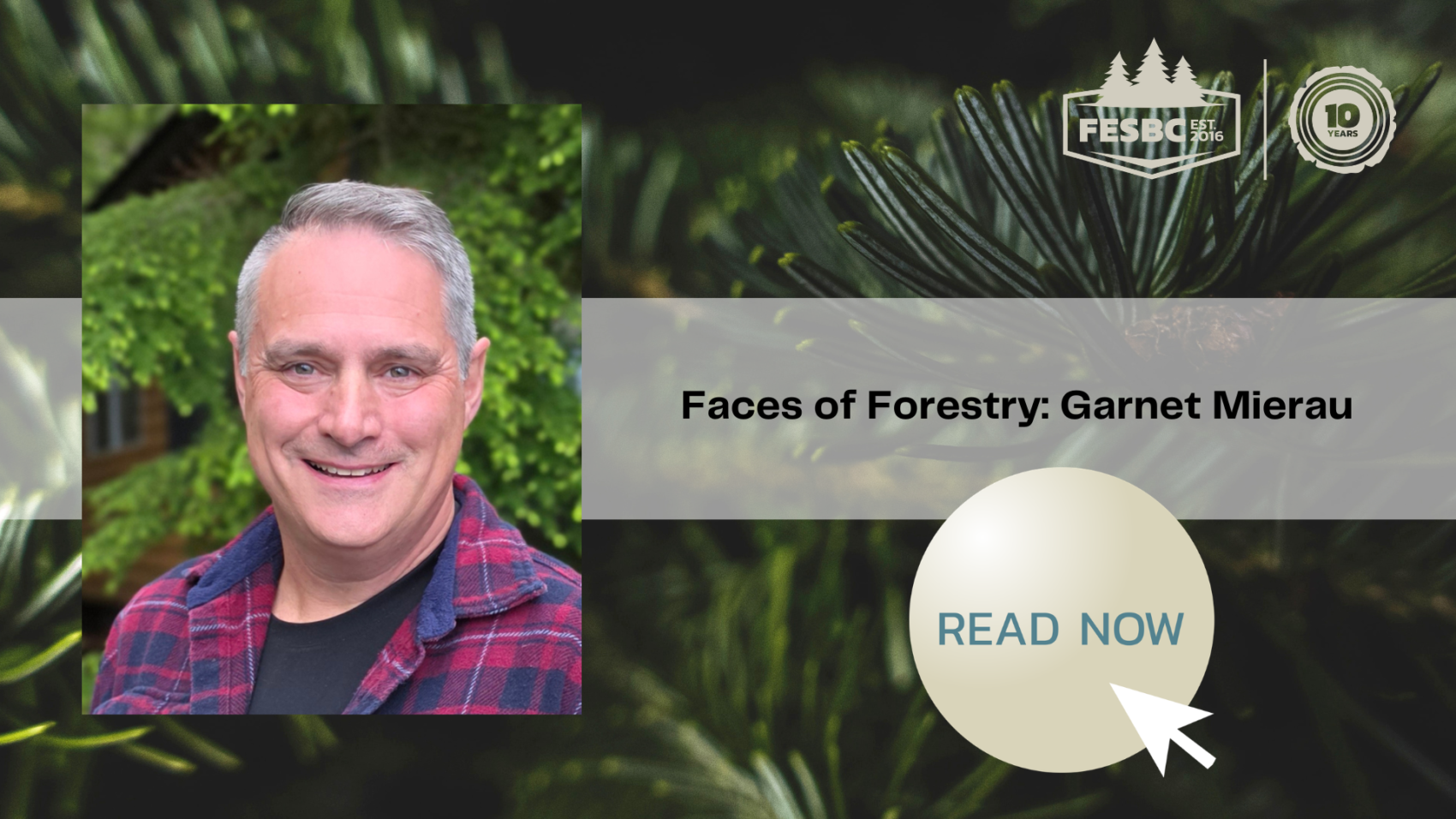
Faces of Forestry is an initiative of the Forest Enhancement Society of BC (FESBC) to highlight people doing meaningful work to support healthy and resilient forests across British Columbia. This month, we feature Garnet Mierau, Registered Professional Forester (RPF) and Executive Director of the Wildfire Resilience Consortium of Canada (WRCC), whose work brings people, knowledge, and practical solutions together to support wildfire resilience across Canada.
Garnet leads the newly formed, national not-for-profit organization created to respond to the growing wildfire challenges being experienced across the country.
“Through a place-based knowledge mobilization network, support for technology and innovation, and a strong commitment to Indigenous fire stewardship and long-term land management, the WRCC is connecting people, knowledge, and solutions. And by fostering collaboration across sectors and communities, we’re working to strengthen Canada’s ability to prepare for, respond to, and recover from wildfires, building more resilience in the face of a growing threat,” he said. “Our mandate is to help transform how the impacts of wildfire are understood, managed, and mitigated for everyone across society. If we do our work right, it will create important and lasting benefits for communities and ecosystems across Canada – and contribute to that same work that’s happening around the world.”
Garnet’s connection to the outdoors began long before his forestry career. He grew up on a family farm in Saskatchewan, where working on the land sparked his curiosity about plants, animals, and natural systems. Family camping trips also helped shape his path, with simple moments spent in nature leaving a lasting impression.
“Sitting around the campfire roasting marshmallows and sharing laughs truly set the hooks in me for a career in the outdoors,” he added.
He went on to complete a diploma in Forest Technology from Selkirk College in Castlegar, B.C., followed by a degree in Forest Science from the University of Alberta. He became a Registered Professional Forester in 1994 and has continued to approach his career with curiosity, professional development, and ongoing learning.
Before taking on his current role with the WRCC, Garnet spent 20 years as a consulting professional forester, representing clients across the southern interior of B.C. as they worked through wildfire risk reduction and mitigation solutions. Many of these projects involved support from organizations such as FESBC, and he came to value practical, operational approaches that helped move his work forward.
“The cliché that ‘You can take the boy from the farm, but not the farm from the boy’ really does apply to me,” he expressed. “As a practitioner, I always looked for solutions that struck a balance between predicted wildland fire behaviour and the values of the local community. It was refreshing to work with like-minded people at FESBC that understood operational realities and the complexity of working with citizen groups.”
For Garnet, that practical approach is closely tied to conversation and dialogue. What he enjoys most about his career is engaging with those who care deeply about forests, communities, and the decisions being made in a changing landscape.
“Every day is a new challenge, and it’s so important to work collaboratively with a broad cross-section of professionals. If I can share a small bit of what I’ve learned throughout my career, I feel that I’m making a difference.”
He believes forestry is also an invitation to slow down, spend time outdoors, and pay attention to what the land teaches. For those entering the field, or for people trying to better understand it, that connection is an important starting point.
“The land has a way of speaking to you. Get out there, observe, listen, and learn,” he said. “A career in forestry is a perfect opportunity to get connected to nature and help build a sustainable economy that supports both the forest sector and ecosystems. And like any career, the more you put into it, the more you’ll get out of it. Stay open. Stay curious.”
While forestry can sometimes be seen through the lens of conflict, Garnet believes many difficult conversations can shift when people spend time together on the land.
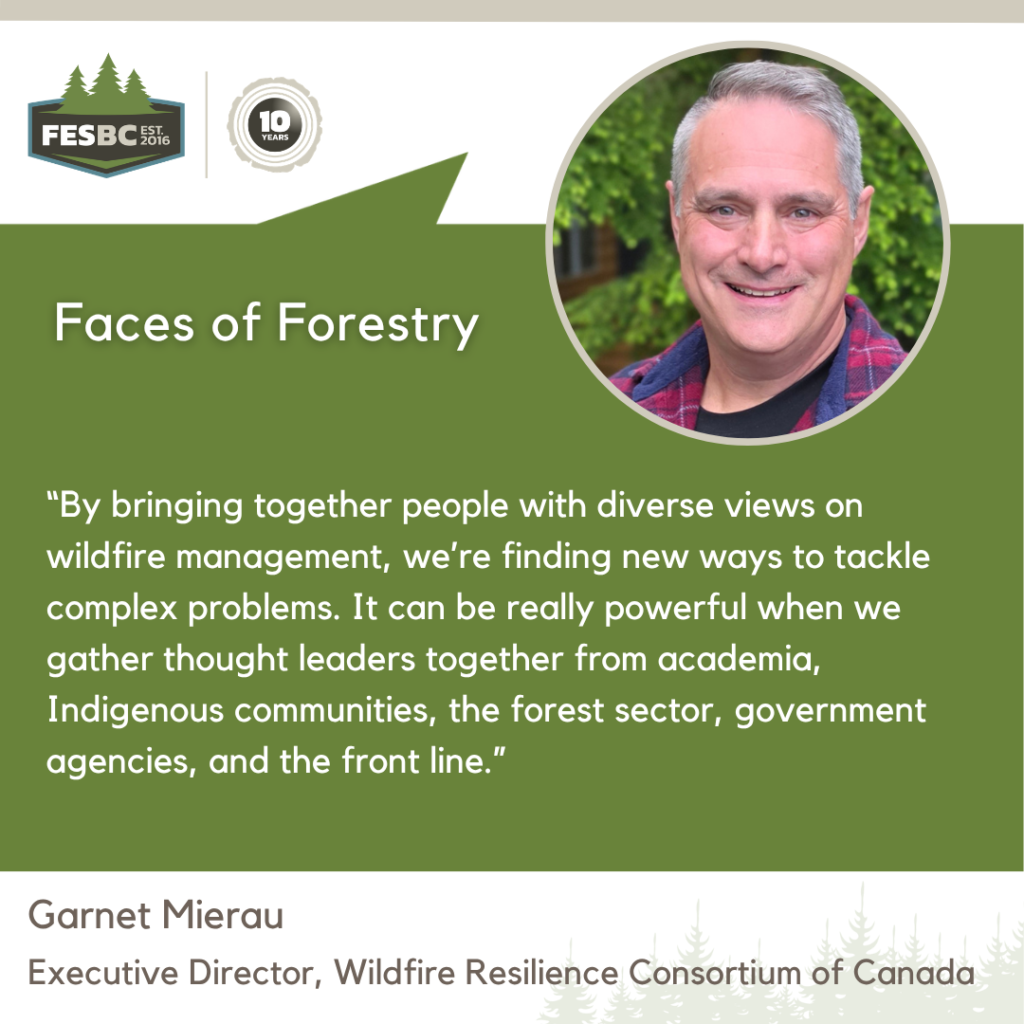
“Similarly to how FESBC has been so successful, the WRCC is focused on specific solutions that make sense in the field,” Garnet explained. “By bringing together people with diverse views on wildfire management, we’re finding new ways to tackle complex problems. It can be really powerful when we gather thought leaders together from academia, Indigenous communities, the forest sector, government agencies, and the front line.”
Thank you, Garnet, for your leadership and for supporting collaborative, practical, and thoughtful approaches that help advance wildfire resilience and forest stewardship across British Columbia and beyond.