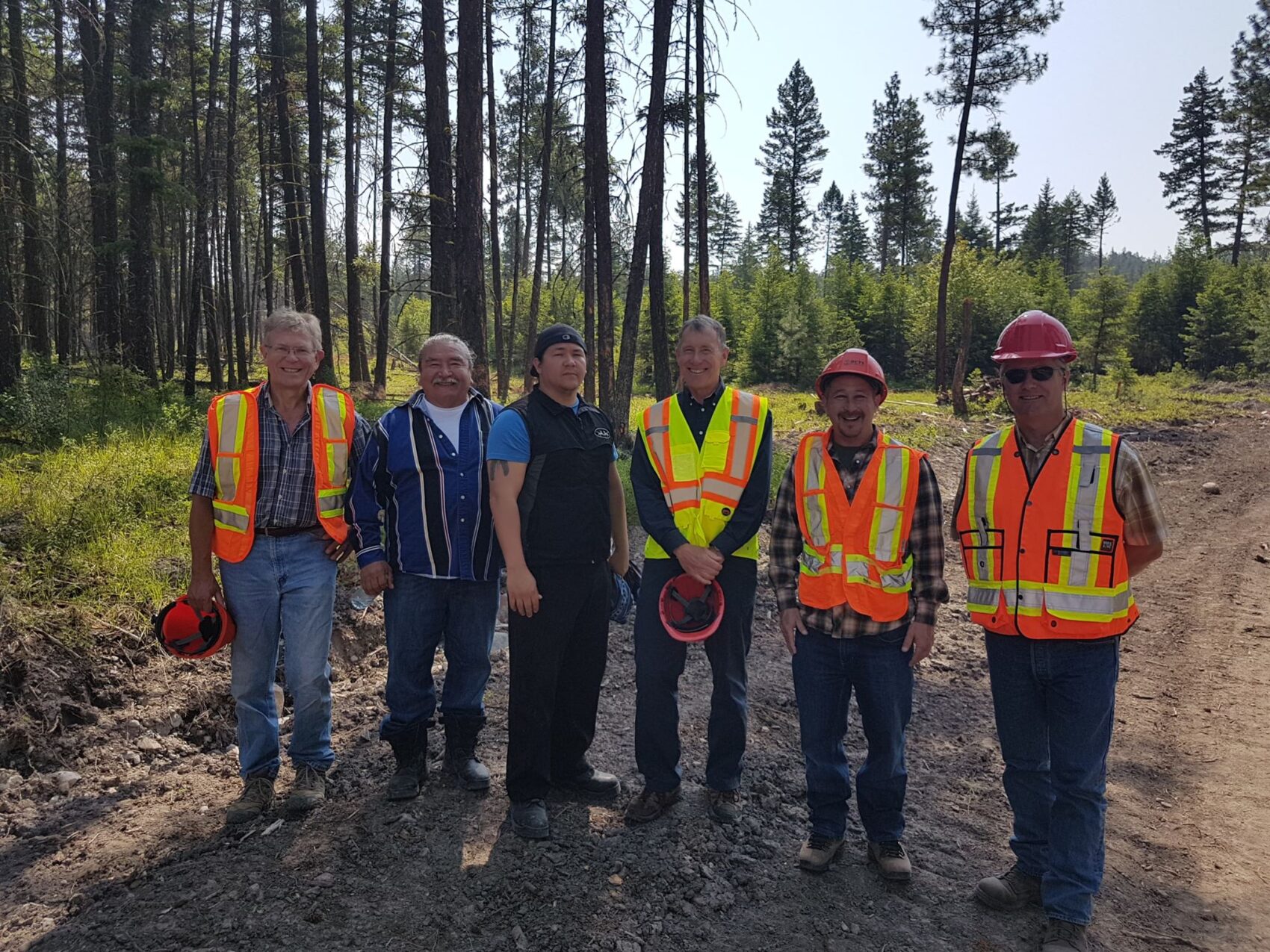
Reflections from FESBC’s First Board Chair, Wayne Clogg
As the Forest Enhancement Society of BC (FESBC) marks its 10th anniversary, we thought it would be fitting to start commemorating the milestone by hearing from one of the people who helped guide the Society through its earliest days. Wayne Clogg, FESBC’s first Board Chair, reflected on what led to the Society’s creation, the challenges of starting something brand new, and the lasting impact FESBC has had on both British Columbia’s forested areas and diverse communities.
A Long-Standing Need Meets a Moment of Opportunity
For decades, foresters across British Columbia (B.C.) within government, industry, and academia had been calling for increased public investment in forest management beyond basic reforestation obligations. “B.C. has world-class forest practice standards,” Clogg shared. “We ensure that harvested areas are replanted and planned appropriately, but there was no long-term program at the time to invest in improving forest conditions beyond that baseline.”
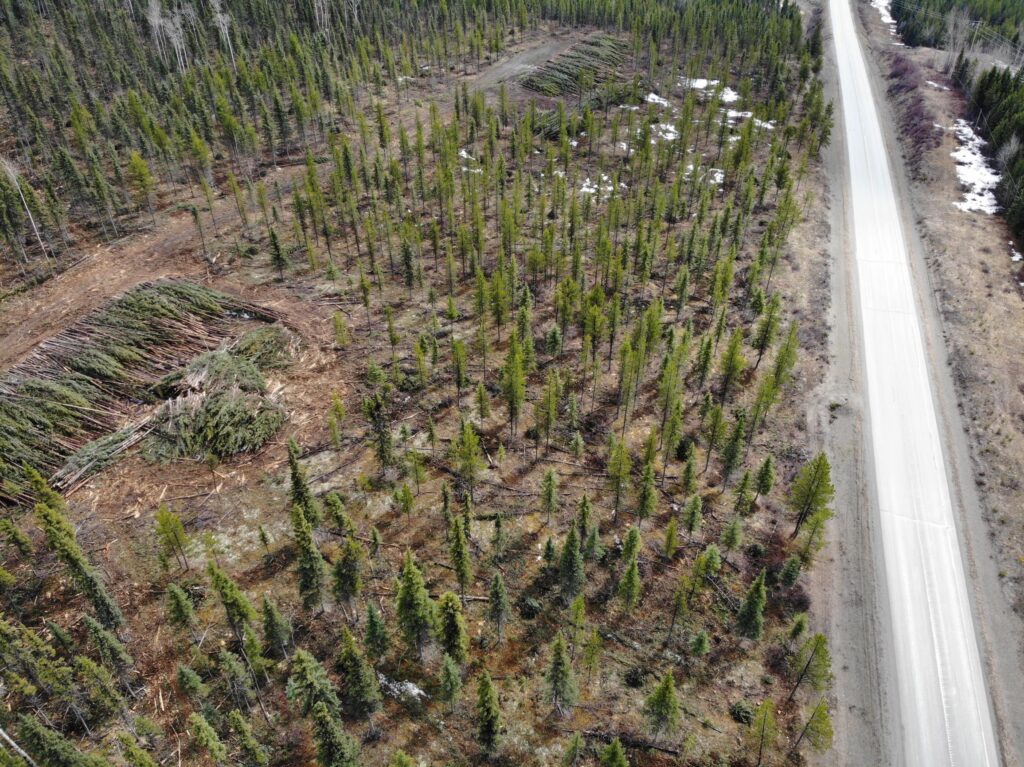 Wildfire Risk Reduction Project_Mackenzie Wildfire Egress. Photo credits: District of Mackenzie
While various short-term initiatives had come and gone, FESBC represented something fundamentally different; the first Crown agency dedicated to long-term, strategic investment to enhance B.C.’s public forests.
The urgency for such an organization was underscored by the unprecedented mountain pine beetle infestation, which caused widespread damage of forests across the province. That crisis, combined with an unexpected $85 million surplus in the Ministry of Forests’ 2015/16 budget, created a rare window of opportunity.
“The surplus allowed the Provincial government to create the Forest Enhancement Society of BC and direct those funds into meaningful, on-the-ground forest enhancement,” said Clogg.
Starting with a Charter and a Cheque
FESBC was established as a Society March of 2016, largely to ensure the surplus funds could be transferred before the fiscal year ended. At the time, the Provincial government envisioned an independent, arm’s length entity that could potentially receive funding from multiple sources in the future.
What that meant in practice, however, for Clogg and his fellow Directors, was a blank slate.
“We essentially started with a charter and a cheque for $85 million,” Clogg recalled. “There was no office, no staff, no bank account, no systems, no operational plans. We didn’t even have a logo or a website. It was early days with a lot to accomplish, and we needed to build the right team to start it all from scratch.”
Building the organization from the ground up fell to the inaugural Board, which was recruited by Forests Minister Steve Thomson and included individuals with varied and meaningful experience across B.C.’s forest sector. “This was an energetic, committed group that did all the heavy lifting to get the Forest Enhancement Society of BC up and running, and in remarkably short order I might add.”
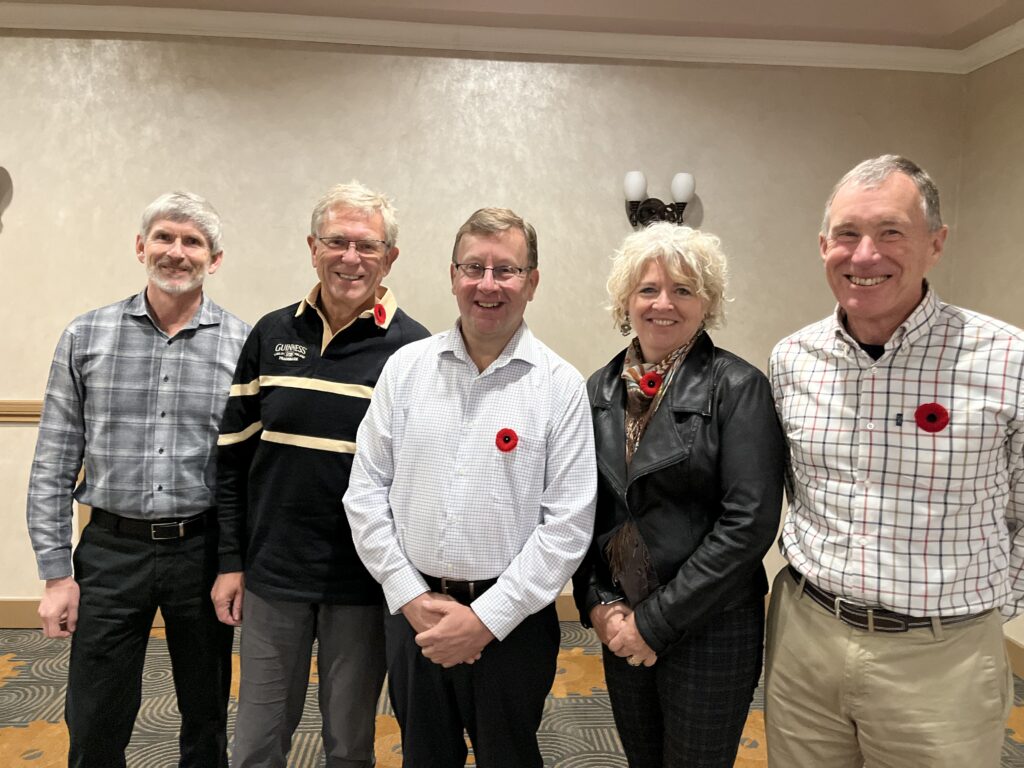 2023 FESBC Board (L-R) Brian Banfill, Dave Peterson, Jim Snetsinger, Sarah Fraser, Wayne Clogg. Missing from photo Michael Kelly and Ian Meier. Photo credits: FESBC
Delivering Impact with Limited Certainty
In its earliest days, FESBC faced a significant unknown. There was no guarantee of funding beyond the initial $85 million.
“That uncertainty we had before us shaped everything,” said Clogg. “We deliberately built a very lean organization; one we could responsibly wind down in three or four years if additional funding didn’t materialize.”
The Board decided to adopt a proponent-driven delivery model that still defines FESBC today, allowing projects to be delivered efficiently while keeping administrative costs low. With a broad mandate ranging from improving damaged stands and wildfire risk reduction to enhancing the utilization of wood fibre, enhancing wildlife habitat, and reducing greenhouse gas emissions, the challenge was to maximize impact with limited resources.
“Our focus was to invest in projects that met multiple objectives and were cost-effective,” Clogg explained. “This was so that we could treat as much area as possible throughout the province.”
At the same time, the Board knew that the government and the public were eager to see results. “We needed early wins,” he said. “Fortunately, we were able to identify several shovel-ready projects that aligned with our mandate and could get started right away.”
Shaping a Culture of Value and Agility
Clogg recounts that the early pressure to do more with less helped define FESBC’s organizational culture.
“From day one, we were driven to deliver value for the funds entrusted to us and to remain nimble and responsive. As staff came on board, we were fortunate to find people who truly embraced that vision and still do today.”
Once the Society moved beyond its first year and began delivering projects consistently, staff played a critical role in establishing planning systems and developing robust assessment tools to guide future investments.
“I can’t say enough about the dedication of both the Board and staff,” Clogg added. “Their commitment made it possible for the Society to mature quickly into a highly effective organization. I’m so proud to have been a part of it all.”
Seeing the Impact on the Ground
Over the past decade, projects invested in by FESBC have reduced wildfire risk to better protect communities and critical infrastructure, recovered significant volumes of wood fibre for use as bioenergy, and contributed to the well-being of many rural and Indigenous communities across B.C.
As Board Chair, Clogg believed it was essential to see that work firsthand.
“Our Board made a point of holding at least one Board meeting each year in a region where projects invested in by the Forest Enhancement Society of BC were underway,” he said. “Those visits were incredibly meaningful.”
One visit in particular stands out for Clogg. It was a trip to the Cariboo Chilcotin region, where First Nations partners were leading rehabilitation work on territories heavily impacted by the mountain pine beetle and wildfire. “The positivity of the people was infectious,” Clogg recalled. “Community leaders, workers on site, even the local folks who served us lunch spoke about the immense pride, opportunity, and hope these projects were bringing, most notably for young people. You couldn’t help but feel excited about the impact for communities and the generations to follow.”
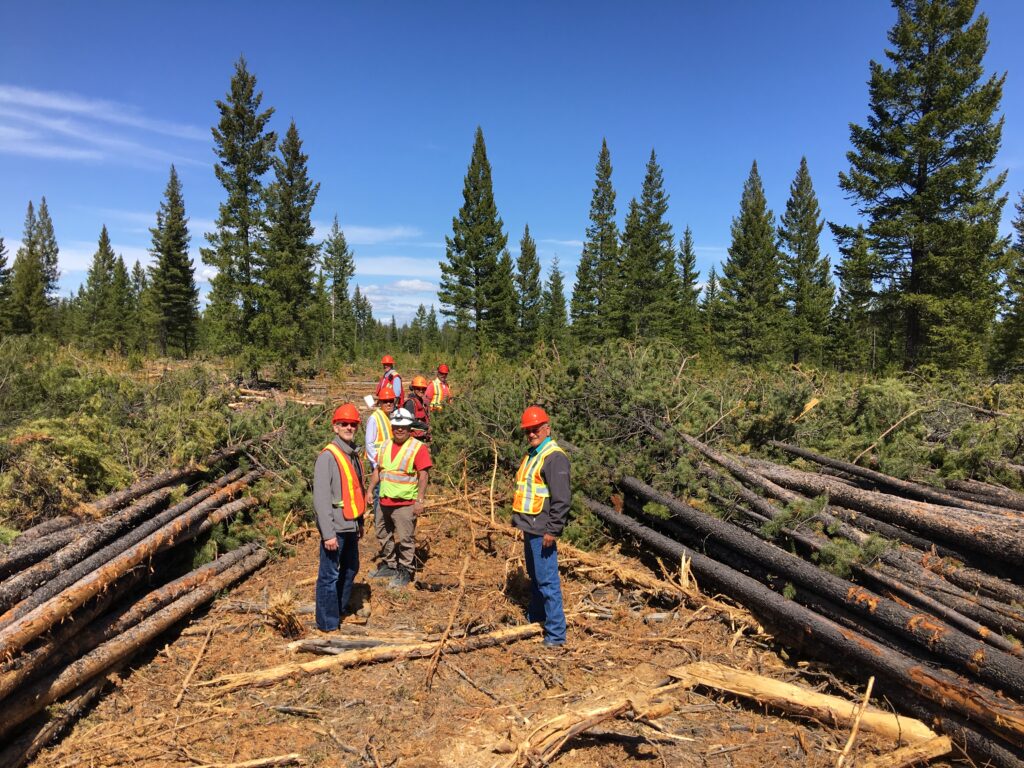 Wildfire Risk Reduction project. Photo credits: Central Chilcotin Rehabilitation
Evolving Within Government, Delivering for the Public
While FESBC was initially envisioned as fully independent, Clogg acknowledges that this structure ultimately proved impractical.
“FESBC is, in reality, a Crown agency, delivering forest enhancement projects on behalf of the Provincial government,” he said. “It doesn’t diminish its value. If anything, it highlights it.”
The Board recognized the advantages of having FESBC invest in project partners to deliver this work on public lands and worked hard to earn and maintain the confidence of the Provincial government leadership and elected officials. “The Forest Enhancement Society of BC has always focused on delivering value for money and stepping up to new challenges.”
 Inquisitive squirrel, credit – Dustin Mela
Looking Ahead
Ten years in, the need for investing in forest health and resiliency throughout B.C. remains significant.
“There is no shortage of opportunities to invest in our public forests,” said Clogg. “Over the past decade, the Society has proven that it can play a vital role in improving forest management for the benefit of all British Columbians today and many generations from today.”
As FESBC continues to carefully steward government funding to invest in forest enhancement projects, Clogg hopes the public will continue to support sustained investment and recognize the Society’s unique ability to deliver high quality results with its many project partners.
“My hope is that British Columbians continue to encourage the Provincial government to invest in our public forests and support the impactful role for the Forest Enhancement Society of BC in this work for many more years.”
** FESBC would like to thank Wayne for sharing his insights and would like to recognize the Board members and staff team who have contributed in exceptional ways throughout the past decade with their expertise, experience and passion for the enhancement of our forests.
Board Members (Past and Present)
- Keith Atkinson
- Brian Banfill
- Wayne Clogg (Board Chair)
- Ken Day
- Trish Dohan
- Sarah Fraser
- Jamie Jeffreys
- Mike Kelly
- Mary Sue Maloughney
- Rick Manwaring
- John Massier
- Ian Meier
- Derek Orr
- Dave Peterson (Board Chair)
- Rob Schweitzer
- Jim Snetsinger (Board Chair)
- Chris Stagg
- Bob Turner
Staff Members (Past and Present)
- Greg Anderson (Executive Director)
- Heather Bepple
- Joyce Clarke
- Dave Conly
- Kathy Dupuis
- Travis Emsland
- Tyler Field
- Jason Fisher (Executive Director)
- Jen Kulchar
- Steve Kozuki (Executive Director)
- Leith Mackenzie
- Chris McGourlick
- Sean Owens
- Gord Pratt
- Ray Raatz
- Brian Watson