Original article published by the BC Forest Professional Magazine.
Written By Aaron Lee, RFT and Travis Emsland, RPF
Wildfire risk reduction is an essential aspect of forest management in British Columbia. As average global temperatures continue to rise incrementally and frequency of catastrophic wildfire incidents intensify throughout the province, more than ever, community leaders and citizens recognize the benefits of proactive fuel management. Community wildfire resiliency plans are being implemented to help better protect homes, infrastructure and human life. Not only does preventative wildfire risk-reduction work help mitigate the risk of future forest fires, and in turn, better safeguard communities, but it is also a necessary step for Indigenous Peoples to reassert their practice of cultural burning which has existed for thousands of years. These burns involve the controlled application of fire on the landscape to achieve specific cultural objectives and fuel mitigation, holding different meaning for different Indigenous communities.
As a result of previous forest management objectives, many forested areas throughout the province are not in a state conducive to implementing cultural burns. Throughout the province though, the forest is being prescriptively thinned, reducing excess layer 3 and layer 4 trees, and helping restore historical conditions to facilitate reintroducing fire back onto the land as a restorative tool, one that supports both ecosystem resilience and cultural practices. Equally important is the growing leadership and involvement of First Nations people in providing the expertise and guidance for this wildfire risk-reduction work. Their involvement provides significant local knowledge to the work, opportunities for community members to reconnect with the land and build on their valuable ancestral skills.
The Juniper Heights Fuel Management Project
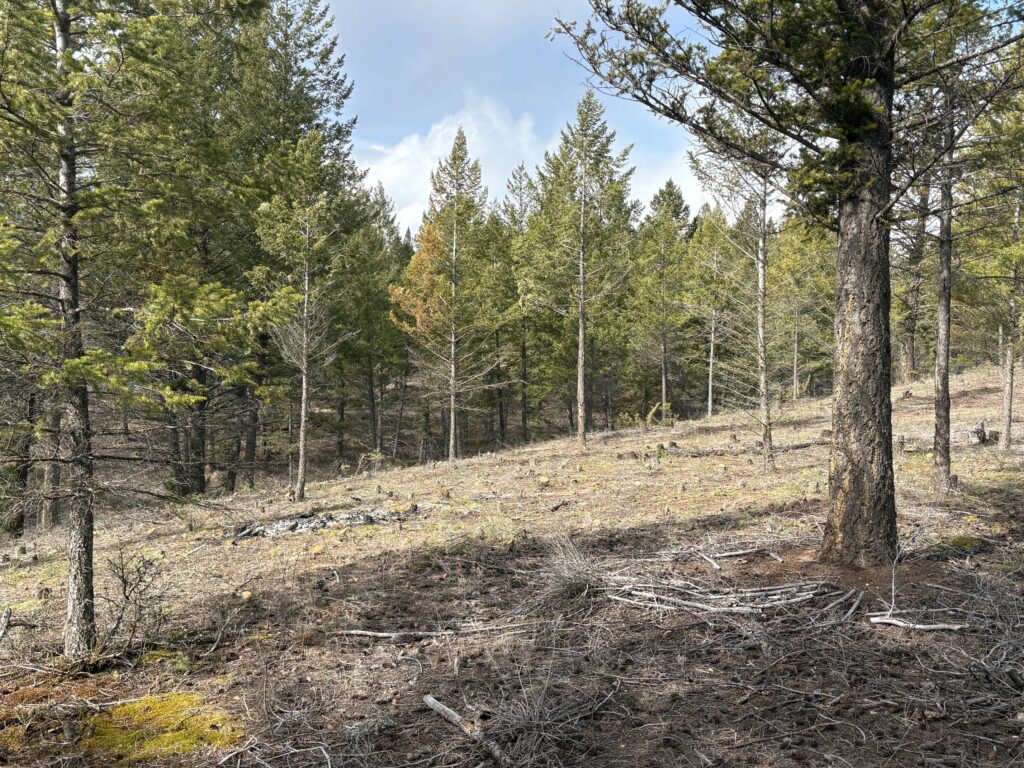
The Juniper Heights project near Invermere, BC, adjacent to the Shuswap Band Reserve, is a culmination of years of wildfire risk-reduction work to prepare the landscape for cultural burning. Although the area had undergone several treatments in previous years, the absence of regular burning practices resulted in significant coniferous encroachment in the stand. Without the controlled application of fire to the landscape, young conifers gradually filled open areas and grasslands, increasing stand density and allowing a significant increase of ladder fuels. Over time, these changes in vegetation elevated the risk of a high-intensity wildfire, which, if it occurred, could negatively impact homes and infrastructure in the area. Recognizing the need to mitigate wildfire risk and enhance the safety of the surrounding community, a new fuel mitigation project was proposed.
The project area was initially highlighted for consideration by Andy McCuaig, RPF, fibre procurement manager at the Skookumchuck Pulp Mill, located in the East Kootenay region of the Canadian Rocky Mountains. McCuaig identified a 117.5-hectare Area of Interest (AOI), which was ultimately refined to 76.4 hectares in the fuel management prescriptions (FMP). Initial fuel management reduction plans included a combination of mechanical and manual treatments, with the mechanical portion of the fibre from the project intended for hog fuel utilization. At the onset of the project, warmer than expected temperatures increased the risk of ground disturbance, making it unsuitable for crews to use heavy equipment. As a result, the project shifted entirely to manual hand treatments and subsequent piling and burning.
Kenpesq’t Forestry LP, a division of Kenpesq’t, the economic development entity of the Shuswap Band, served as the primary contractor, overseeing the development of the prescription and plan, project management, crew organization, and supervision. To undertake a project of this magnitude, Kenpesq’t applied for funding through the Forest Enhancement Society of BC (FESBC). The overall investment from FESBC covered several components of the project, including the preliminary field reconnaissance, FMP development, hand cutting, piling, and burning, as well as grass seeding the burn pile locations to help minimize the proliferation of invasive plants in the exposed soil.
Upon receiving project approval in October 2022, field work began in April 2024 and was completed a year later. Crews manually cut all coniferous species under 15 cm diameter at breast height (DBH), with the exception of five-needle pine. The material was bucked into smaller pieces and piled and burned in accordance with the FMP specifications. A total of four units were treated, including one re-treatment unit, which was initially completed seven years earlier. This unit was identified as a maintenance treatment and the work completed within the unit ensured the initial investment of resources, to reduce the high fuel load, would not be lost.
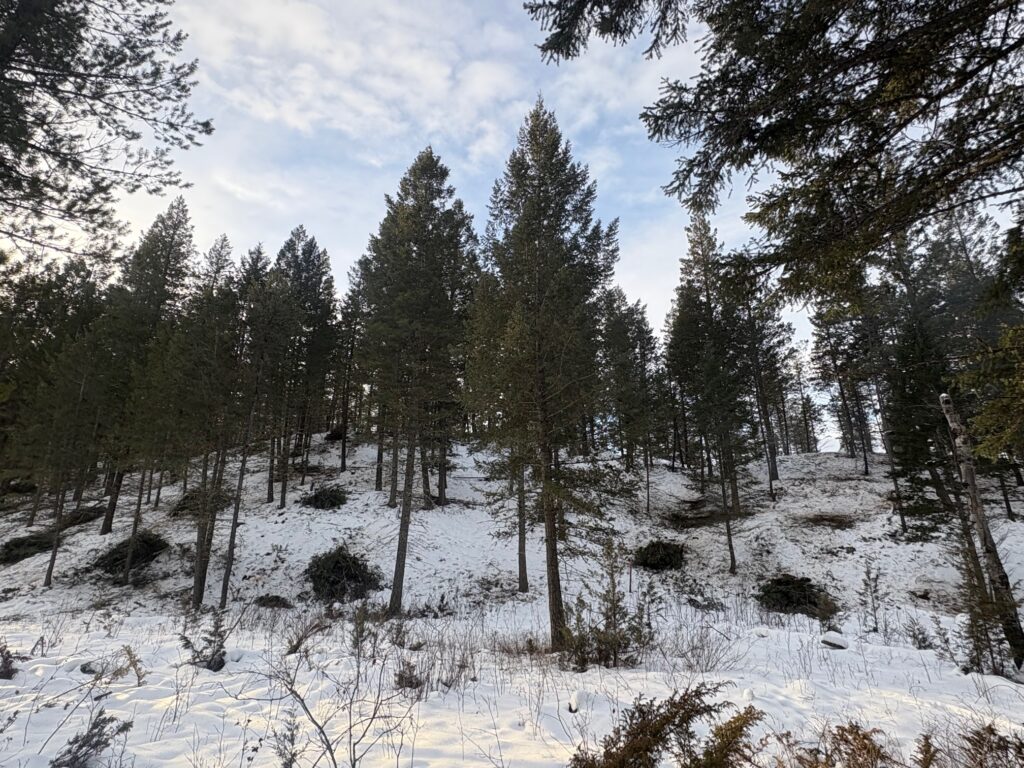 Juniper Heights, January 2025, work in progress. Photo credits: Aaron Lee, RFT.
Outcomes, Lessons Learned, and the Path Forward
Incorporating local First Nations knowledge into the fuel-reduction work, including local knowledge of the area, historical species, and stand structure, was essential for success. Throughout the project, Jamie Thomas, a local Band member, trained and mentored his two children to impart both practical forestry skills and traditional knowledge. For the Shuswap Band, the work has contributed to long-term capacity building and helped create more opportunities for Band members to work closer to home and within their traditional territory.
To date, the completed treatment has created a more resilient landscape within the wildland urban interface (WUI) by significantly reducing the density of conifer trees and fuel loads, providing additional suppression options for wildland firefighters. While further results and specific successes may not be apparent for some time, the more open stand structure will allow better access and visibility for both ground and aerial resources in the event of a wildfire. From a wildlife habitat benefit perspective, the work done has enhanced the area for several species, including bighorn sheep, mule deer, white-tailed deer, and elk.
For all involved, a key lesson learned throughout the project was the importance of adaptability. Although harvesting fibre would have been economically beneficial, that work was not worth the significant soil degradation risk. Instead, the project was adapted to consist entirely of hand treatments while still ensuring wildfire risk-reduction goals were met without compromising the long-term resilience of the landscape.
Perhaps the most important outcome, from a long-term perspective, is that by implementing the FMP and reducing the number of stems of small conifers, the treatment has reduced the fuel load in the stand adjacent to a community. BC Wildfire Service considers this is a fundamental first step towards undertaking a cultural burn. More data will likely have to be gathered prior to ignition of a cultural burn, and the objectives will be determined by the Nation at a time deemed appropriate by them. Given the new current state of these treatment units, fire will be an essential part of the maintenance process. The reintroduction of fire onto the landscape will help maintain a lower fuel load and mimic the natural disturbance type (NDT4) for this geographic region, which is characterized by frequent, low-intensity, stand-maintaining fires. Kenpesq’t is currently working with the Ministry of Forests to identify opportunities for future partnerships and to align efforts toward achieving shared objectives. Moving forward, honest and meaningful collaboration will be fundamental to this process.
The relationships created and the understanding built over the duration of this project among forestry professionals, community members, and partnering organizations were as valuable as the work itself. The connections, grounded in openness, shared learning, and a commitment to stewardship will support the success of future wildfire risk reduction projects across the region. The Juniper Heights project is a valuable example for other practitioners to incorporate thoughtful planning, flexibility, and Indigenous leadership into their work. That, along with a willingness to co-create solutions to achieve meaningful, effective and long-term improvements for forests and communities, will benefit us all for generations to come.